
Areas of action and measures contributing to decarbonization
To reduce emissions locally, there are many areas of action at the municipal level:
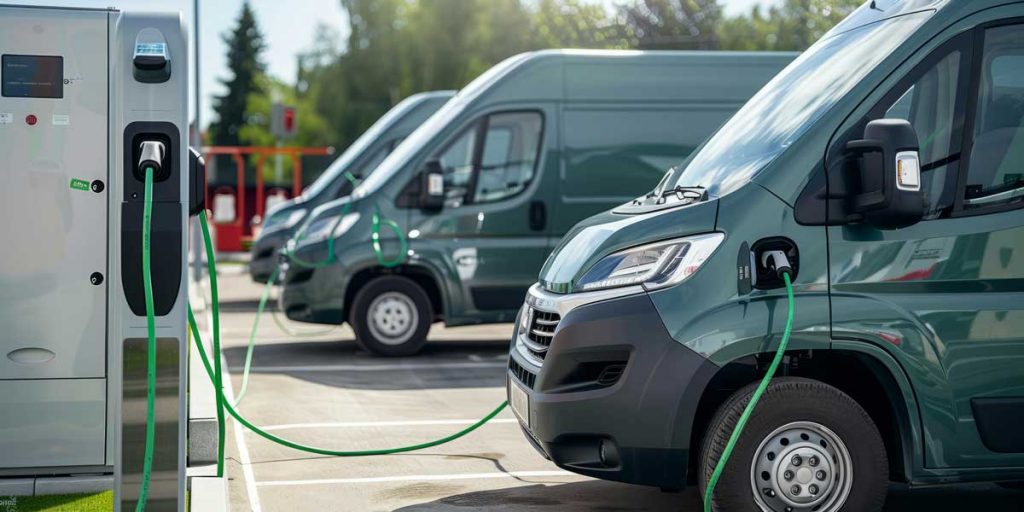
Municipalities can effectively lower carbon emissions by increasingly relying on renewable energy sources — for example, by installing solar panels on public buildings. Climate-friendly mobility is another key aspect of decarbonization, such as expanding cycling networks, deploying electric bus fleets, or promoting car-sharing services. There are already examples of cities that have achieved car free city centers through such measures.
Another important approach to mitigating the greenhouse effect is the energy-efficient renovation of municipal buildings, which sustainably reduces energy consumption. Promoting climate-neutral heating for private households and public buildings — for instance through district heating networks and heat pumps — also makes a significant contribution. Furthermore, municipalities can support the circular economy and reduce waste to conserve resources and cut emissions. Finally, the creation and expansion of urban green spaces can help bind CO₂ and improve overall quality of life.

To slow global warming and stabilize the climate, a local decarbonization pathways with measurable targets and concrete measures is essential. In the following, we take a closer look at the strategies for reducing the greenhouse effect, which relate to all of the aforementioned areas of action.
Development of a municipal climate action plan
Anyone who wants to develop local decarbonization pathways needs a municipal climate action plan. The preparation of such a plan can be supported through climate protection funding programs, such as the Federal Municipal Guidelines.
First, the current status must be documented to measure future success. If energy consumption and emissions have not yet been systematically recorded and analyzed across sectors, this is the first step in planning. The results provide information on potential savings and indicate the key focus areas for the climate action plan. Based on this, you can develop concrete measures to reduce greenhouse gases in your municipality. Crucial for long-term success: actively involve citizens, businesses, and municipal administration in the process.
Involvement of Citizens and Local Stakeholders
For effective municipal decarbonization, citizen participation in climate change mitigation is a decisive success factor. Citizens play a crucial role in enabling societies to achieve their climate targets. Therefore, decarbonization strategies must be firmly anchored within civil society. People are actively involved and help shape the process. The focus is less on the individual amount of CO2 reduction achieved personally; what truly matters is that people are included and thereby experience a sense of self-efficacy in a field that has previously been unfamiliar to many.
Everyone can influence CO2 emissions through their consumption behavior. Energy use at home, the choice of energy-efficient appliances, reducing air travel, using public transport, or switching to electric vehicles or bicycles are all decisions that contribute to a low-emission lifestyle.
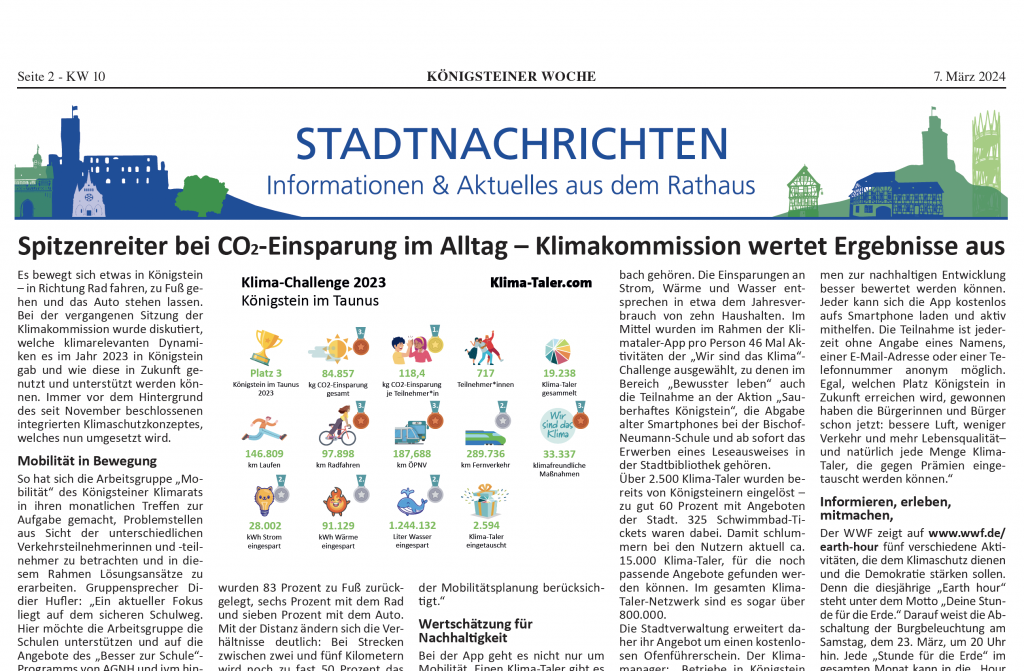
The Klima-Taler reflects each of these individual decisions. Participation is automatic within the app and collects traffic data that are valuable for municipalities in mobility and transport planning. This is implemented through gamification examples that provides immediate rewards: changed consumption behavior pays off, awareness of decarbonization grows, and a foundation for long-term transformation is established.
Financial engagement represents another pathway through which citizens can participate in the “decarbonized economy.” This, too, can be beneficial: citizen cooperatives develop local wind farms and generate, use, and sell renewable energy; green investment funds offer participation opportunities that allow individuals to position themselves within emerging sustainable markets. Overall, financial decisions help shape decarbonization processes—and in some cases also benefit from supportive government frameworks.
How can a decarbonization strategy be socially equitable?
The federal government provides financial assistance, subsidies, and tax incentives to reduce the costs of green technologies for low-income households. A key prerequisite for achieving CO2 reductions and implementing effective environmental and climate policy is that citizens perceive these measures as fair. This requires that they are able to participate in shaping and designing these measures.
Environmental policy has always delivered clear macroeconomic benefits — yet the benefits for each individual must be communicated and made tangible. The Klima-Taler provides a valuable and previously neglected starting point in this regard. It raises awareness of the aspects of decarbonization that each individual can influence. It complements the concept to reduce the ecological footprint by offering direct guidance for action. At the same time, it links this with incentives for CO2 reduction — low-threshold, continuously present, supported by precise data analysis and a “climate currency” as a reward system.
Accessible to everyone, the Klima-Taler app reaches not only those who already engage with environmental policy, but especially those who have not yet done so — including people who feel hesitant about the topic, who view change critically, or who have simply not been interested so far.
This marks a first step toward social equity. Within the Klima-Taler concept, individuals themselves are placed at the center as the benchmark of CO2 savings. The gamified layer is identical for all participants. It provides an accessible entry point into decarbonization topics and creates the conditions and first steps for involving citizens in shaping a socially just transition. Is there a better way to introduce this crucial issue for a sustainable future society to broad segments of the population?
Klima-Taler plays an important role in decarbonization strategies
The debate surrounding the complex concept of “decarbonization” is not about simply issuing appeals or transferring knowledge from politics, business, or academia. Rather, society must be actively involved in the process. Too often, “leaders” speak to the “public” in a generalized, top-down, and purely exhortative manner. Behavioral economics has long demonstrated that messages are communicated more effectively through incentives. These effects can be strengthened even further within a playful environment: the human desire to play is an evolutionary trait. “Serious gaming” makes use of these mechanisms, and studies and academic literature have long highlighted the associated learning effects. The Klima-Taler app provides such incentives for CO2 reduction — users generate a form of currency through their emissions savings, which they can redeem for valuable offers, products, services, or discounts.
Through these incentives, awareness of decarbonization emerges — and above all, people recognize that it is worthwhile.
The Klima-Taler app introduces the topic of decarbonization at the municipal level. It addresses not only citizens but also the local economy. It functions as a future-oriented discount system, supporting local retailers in attracting customers. At the same time, it gradually establishes CO2 reduction as a social norm within the municipality and beyond: the The Klima-Taler can already be used for payments in more than 50 municipalities, with additional municipalities joining each month.
A key feature of the The Klima-Taler app is that it brings together a wide range of CO2-reduction initiatives. Mobility and transport, as well as household consumption (electricity, heating, water), cover areas in which citizens can actively contribute. All of this is measurable, accessible to participants, and therefore encourages behavioral change. This is precisely the reason for the Klima-Taler’s popularity among participants: it demonstrates personal efficacy.
Integration into Municipal Budget Planning
Successful local decarbonization pathways require planning security. Climate-relevant investments in energy efficiency, renewable energy, or sustainable mobility must be specifically planned and prioritized. Reliable financing of measures demonstrates the political will to implement them.
Establishment of Municipal Climate Management Structures
To develop and effectively implement decarbonization solutions, establishing municipal climate management structures is crucial. Clear responsibilities within the administration should be assigned, for example through climate protection management or a dedicated climate protection team. Strong networking with other departments—such as urban planning, transport, property management, and public relations—is essential, as climate protection always requires an integrated strategy. Political oversight through regular reporting to the municipal council also strengthens accountability. Over time, this creates a professional structure that establishes climate protection not only as project-based work but as a permanent municipal responsibility.
Monitoring, Evaluation, and Progress Communication
ChatGPT:
The foundation for learning processes and the continuous adaptation of the decarbonization strategy is monitoring and evaluation. Equally important is transparent communication of progress to politicians, administration, and citizens in order to build trust and encourage participation. Here, too, tools like the Klima-Taler app help cities make CO₂ savings visible and communicate them effectively. In this way, local decarbonization pathways do not remain static but are continuously reviewed, improved, and supported by the community.
There are many ways to support a local decarbonization action plan
A good way to secure financing is to obtain support through funding programs. To implement municipal climate protection measures, a variety of public funding programs are available at the federal, state, and EU levels. The opportunities are diverse, ranging from funding for the climate action plan itself to project-specific support. We have therefore dedicated a separate article to the promotion of climate protection programs.
In summary, the following measures are particularly effective for ideas for local decarbonization:
Particularly effective for a local decarbonization action plan is first the development of a well-founded climate action plan. It provides the strategic foundation on which all further measures are built by systematically recording emissions, identifying savings potential, and defining concrete goals and action steps. Equally crucial is the active involvement of the population, fostered through formats such as citizen dialogues or digital tools like the Klima-Taler app for cities. The app motivates climate-friendly behavior through playful elements and makes decarbonization progress immediately visible, strengthening public acceptance and support. In addition, establishing municipal climate management structures is essential to clearly anchor responsibility within the administration and to manage the implementation of the strategy in a professional and sustainable manner.
Do you have questions? Get in touch!
We look forward to meeting you. Let’s explore together the possibilities of the Klima-Taler app for your municipality.

The Klima-Taler app makes it easy to get started with data-driven, climate-friendly, and citizen-oriented mobility planning—simple, secure, and effective.
