
Amenity Value in Cities Prevents the Decline of City Centers
Improving the amenity value in cities is closely linked to measures aimed at preventing the inner city decline. Lively and attractive spaces draw more visitors. City centers that offer not only shopping opportunities but also green spaces, seating areas, playgrounds, and cultural activities become places where people enjoy spending time. Such destinations bring customers to local retailers, reduce vacancies, and help break the vicious cycle of urban decline. Overall, designing city centers to be vibrant and user-friendly simultaneously strengthens brick-and-mortar retail and the local economy.
Greening and Unsealing
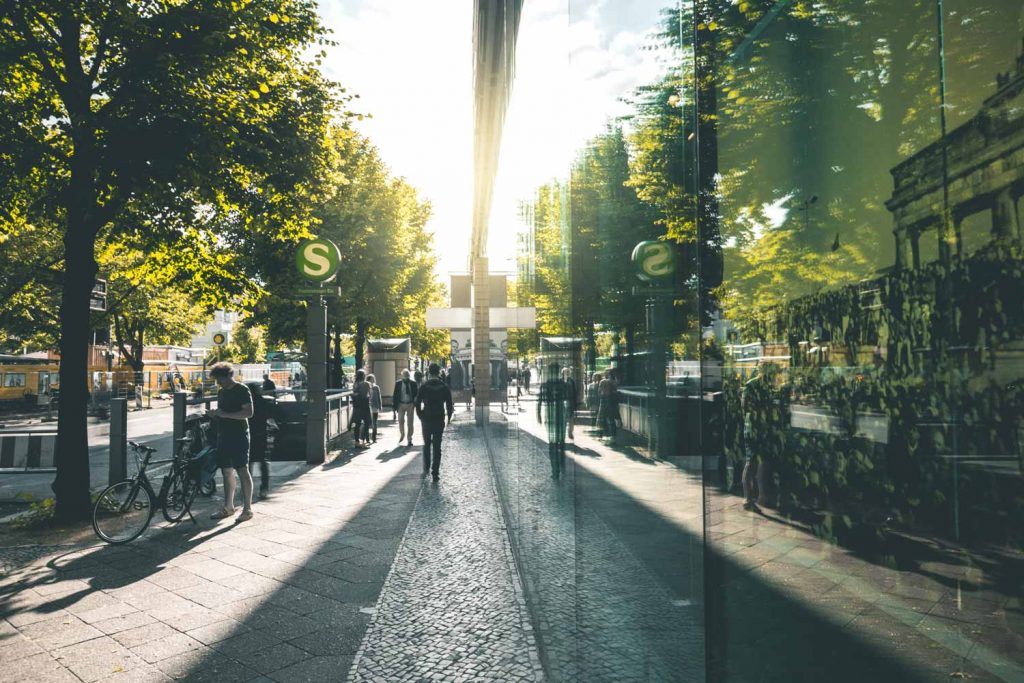
The amenity value in city centers can be improved in many ways through increased urban greenery. 85.9% of respondents in the “Germany City Center Study 2022” expressed a desire for more greenery in their city centers. More trees and green spaces in public areas improve air quality and reduce urban heat islands. Green façades and rooftops capture CO₂, filter fine dust and air pollutants, and improve the urban climate in the long term. Green spaces also provide room for social interaction, relaxation, and short breaks from everyday city life, making city centers more vibrant and attractive. All of this has a positive impact on people’s well-being.
Attractive Amenities Enhance Urban amenity value
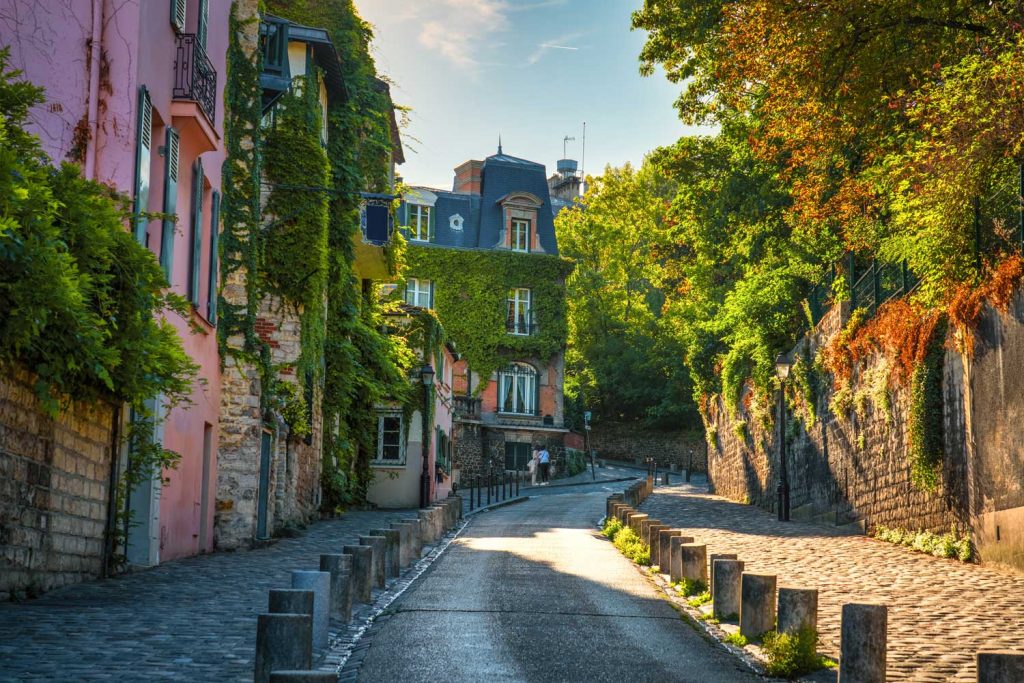
Shopping is no longer the only reason people visit city centers. Mixed-use concepts increase the amenity value. Cultural offerings, gastronomy, and children’s playgrounds make city centers more appealing. Therefore, when addressing growing vacancies, it is wise to remain open to diverse usage concepts. Instead of a mono-functional shopping culture, a city center with high amenity value may offer concerts, readings, city rallies, pop-up gastronomy, creative city tours, or sports activities.
Inviting Places to Linger

The amenity value in cities is closely linked to appealing places to spend time. In addition to more urban greenery, essential needs must be met—ideally accessible to all and free of charge. Attractively designed squares with comfortable seating, drinking water fountains, and clean public restrooms are important for enhancing the amenity value in city centers. It is worthwhile to ask citizens about their wishes to avoid planning mistakes. In Erlangen, this has been successfully implemented since 2021 with the “Bench Radar.” On an intuitive map, residents can indicate the perfect location for a new bench. As a result, 30 new benches are installed each year—exactly where people want to spend time.
Cleanliness is a Basic Requirement
Many positive aspects of the cityscape go unnoticed if cleanliness is lacking. A beautifully designed square is not inviting if litter is scattered around. Therefore, good waste management infrastructure is essential for amenity value in city centers. There are various solutions for efficient waste disposal. It is important not only to provide enough trash bins, but also to empty them frequently. Smart waste bins with fill-level sensors and compaction functions can be helpful. In highly frequented areas, waste systems with underground containers are also useful to prevent unpleasant odors. Visitor flow analyses can help optimize the emptying of waste bins and street cleaning schedules.
Lively Places Are Safer
An important aspect of urban amenity value is that everyone feels safe. Fear of crime, accidents, or harassment can lead people to avoid certain neighborhoods or public spaces. Good street lighting and the avoidance of so-called “fear zones”—paths and areas with hidden corners—are key elements of urban crime prevention. Mixed-use development combining residential, commercial, and retail functions also makes neighborhoods safer. Youth and social work programs are additional important preventive measures.
To reduce accidents, completely car-free zones or 30 km/h speed zones can be introduced. Safe crossings, wide sidewalks, and dedicated bicycle lanes also lower accident risks.
Car-Free Cities or Zones
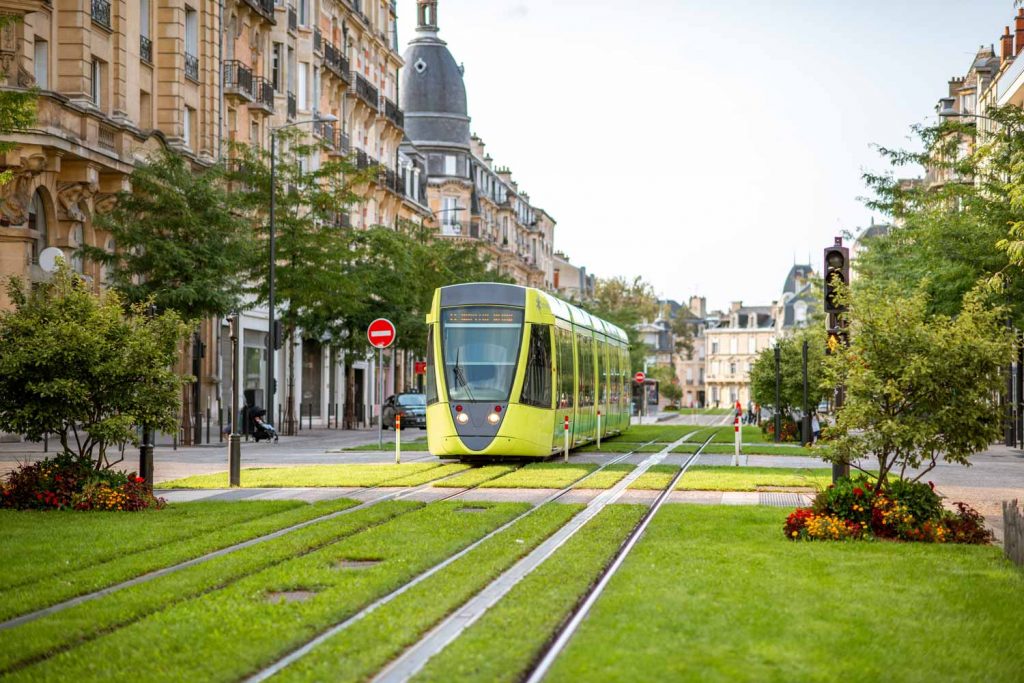
According to the “Germany City Center Study 2022,” 56.5% of respondents stated they would give up parking spaces for cars in the city center in favor of greater amenity value. There are now many examples demonstrating the improved amenity value in car-free cities or car-free zones: less noise, better air quality, and above all, more space for cycling and walking paths as well as places to relax and linger.
Public Participation Ensures Needs-Based Planning
Public participation plays a central role in enhancing the amenity value in city centers. When residents and users can contribute their ideas, spaces are created that truly meet people’s needs and are actively used and appreciated. Participation also strengthens identification with public spaces, leading to better care and informal social control. Through co-creation, conflicts can be identified early and resolved before they have negative effects. Overall, public participation helps ensure that city centers remain lively and attractive.
Achieving Urban Amenity Value with Digital Tools
To achieve a high amenity value in city centers, targeted planning is essential. Municipalities are increasingly using digital tools and apps that provide data on how public spaces are used. Such applications anonymously record where people spend time, how long they stay, and which areas are particularly popular or less frequented.
One example is the Klima-Taler app. It enables cities to collect this information in compliance with data protection regulations and to systematically improve the amenity value in their city centers. The Klima-Taler app makes public participation simple. Based on the data collected, seating areas, green spaces, playgrounds, and meeting zones can be optimally placed. These locations can then be added to the “Climate Treasure Map.” Users can find “cool places,” “drinking water fountains,” and other attractive spots to spend time, and use routing features to navigate directly to them. In this way, the app combines digital analysis with urban planning to make city centers more attractive and livable.

Urban Amenity Value at a Glance
To increase the amenity value in city centers, green spaces, attractive amenities, and inviting places to linger are essential. Cleanliness, safety, and barrier-free design also ensure that people enjoy spending time there and that city centers remain vibrant. Measures such as car-free zones, mixed-use concepts combining retail, culture, and gastronomy, as well as public participation, strengthen attractiveness and prevent vacancies. Digital tools such as the Klima-Taler app support municipalities in planning and improving public spaces based on data. Overall, it is clear: designing city centers to be user-friendly enhances well-being, strengthens local businesses, and prepares cities for the future.
If you would like to learn how the Klima-Taler app can improve the amenity value in your city, we would be happy to answer your questions.

Markus Schulz
markus@klima-taler.com
